BestInvestmentOpportunityinGilgitBaltistan,Pakistan:WhatForeignInvestorsAskUs
The questions foreign investors actually ask us about mining in Gilgit Baltistan, Pakistan, answered plainly, including the parts that should make you cautious.
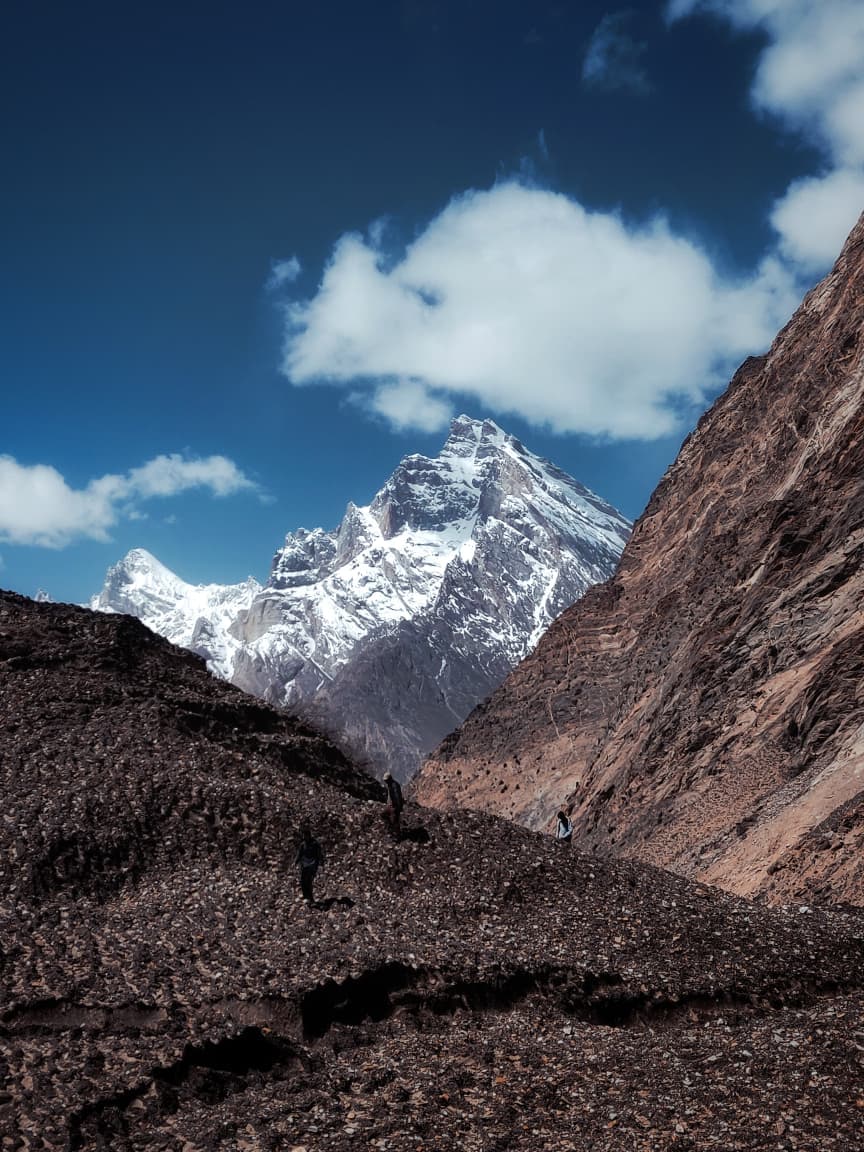
Most of what gets written about investing in Pakistan's minerals is either a government brochure or a warning. We sit somewhere in the middle. We hold ten licensed blocks in Gilgit Baltistan, so obviously we think the region deserves your time, but we also take the calls where investors ask the uncomfortable questions. These are those questions, with the answers we actually give.
Why do people call Gilgit Baltistan the best mining investment opportunity in Pakistan?
Mostly because of how little of it has been touched. The region's mines department puts its mining area at more than 43,000 square kilometres, and its Secretary of Minerals, Shahzeb Sheikh, said in February 2026 that much of it is still unexplored. About 1,840 square kilometres is under exploration licence and around 898 square kilometres under mining lease. That is roughly six percent of the ground. In most mining regions the good ground was pegged decades ago. Here a lot of it is still open.
The second reason is the mix. Copper, gold, antimony, lead, molybdenum, iron, nephrite jade, marble and granite all occur here. The same official figures put copper grades between 0.2 and 74 percent across nine valleys, and antimony between 50.4 and 81.5 percent at the better showings. Read the top of those ranges as individual samples, not deposits. The spread still tells you the geology is real.
Is the $8 trillion figure for Pakistan's minerals real?
Not in any sense you should build a financial model on. Pakistan's government has valued its mineral resources at around $8 trillion. The Center for Strategic and International Studies, in an April 2026 analysis, pointed out that more than 95 percent of the country's mineral terrain is underexplored and that no internationally certified reserve estimates exist. So the honest version is this: the potential is large, the proof is thin, and anyone quoting you a trillion dollar number is selling something. Judge a specific block on its own evidence.
Can a foreigner own a mine in Pakistan?
Not directly. Under the Gilgit-Baltistan Mining Concession Rules, a mineral title can only be granted to a company incorporated in Pakistan. In practice foreign investors come in one of three ways: a joint venture with a company that already holds the licence, a farm-in where you fund exploration in exchange for a share, or a Pakistani subsidiary that applies for its own title. Most choose one of the first two, because the ground is already permitted and the community agreements are already signed. Each route is explained on our investment routes page.
Is it safe to invest in Gilgit Baltistan?
This is the question that matters most, so here is the careful answer. The security risks that dominate coverage of Pakistani mining are concentrated in Balochistan, where headline projects such as Reko Diq sit. CSIS noted in 2026 that terrorism there runs at about seven times the national average. Gilgit Baltistan is a different territory with a different risk picture, and the same valleys we work in host foreign climbers and trekkers every season. That does not make it risk free, and you should run your own assessment. For site visits we arrange the NOCs and security permissions ourselves, so you are not doing it alone.
What is the government doing to attract mining investment?
More than it was five years ago. The Special Investment Facilitation Council was set up in 2023 to bring in foreign investment by cutting across ministries. In 2025 Pakistan announced a National Minerals Harmonisation Framework meant to standardise rules between provinces, simplify licensing and add tax incentives. The catch, which CSIS also flagged, is that each province has to adopt it before it means much on the ground. Large international deals are happening regardless: a $500 million partnership with US Strategic Metals signed in September 2025, and Saudi Arabia pursuing a 15 percent stake in Reko Diq. What those deals mean for the north is on our United States and Saudi Arabia pages.
What can I actually invest in here?
With us, four things. You can buy material: we quote copper, nephrite jade, placer gold, antimony, lead, quartz and granite FOB Karachi or CIF. You can take a joint venture or farm-in position in a specific licensed block. You can buy equity in the consortium. Or you can buy a whole company, because Earth Lux Mines & Minerals, which holds our Jutial Nala and Gupis blocks, is offered for outright acquisition. Every block, with its stage and area, is listed on the concessions page.
Which blocks are producing and which are early stage?
Four of our ten are in operation. Hilal Abad in Kharmang produces premium nephrite jade alongside serpentine and copper, and the deposit is reachable by road. Bagicha in Skardu has copper with the vein exposed at surface, plus marble. Our placer gold licence runs 26 kilometres along the Skardu road. Jutial Nala near Gilgit city carries copper veins and lead. The other six, including Askoli in Shigar and Gultari, are at exploration stage, which means a cheaper entry and more geological risk. Neither is better. They suit different investors.
Why does road access matter so much?
Because in the Karakoram, access is a cost line. A block you can only reach on foot or by helicopter can burn through an exploration budget before any material moves. A block a truck can reach changes the cost of sampling, bulk testing and eventually shipping. Hilal Abad, Mahdi Abad, Bagicha and the Skardu placer licence all have it. When you compare opportunities in Gilgit Baltistan, ask about access before you ask about grade.
How do I check that a mining company in Gilgit Baltistan is genuine?
Ask for the licence stage and number, and the incorporation certificate behind it. Ask whether the grades come from an independent laboratory or from the operator's own estimate, and ask to take split samples for your own assay. Ask to see signed community agreements rather than assurances that relations are good. There is a longer checklist in our guide to mining companies in Gilgit Baltistan, and it applies to us as much as to anyone.
How do I start?
Send a note through the investor desk saying what you are after: material, a stake in a block, or a whole company. We share boundary coordinates, geological reports and assay data after an NDA, and we can arrange a site visit with the permissions handled. The serious conversations usually start with one block and one question, not a request for everything at once.
Continue reading
More from the field
 Durr & Zircon Mines Consortium
What the $500 Million Pakistan-US Minerals Deal Means for Gilgit Baltistan
US Strategic Metals and Pakistan signed a framework in September 2025 covering exploration through refining. The first shipment, in October 2025, was antimony, copper concentrate and rare earths, the same commodities held under licence across our own concessions.
Read insight→ Durr & Zircon Mines Consortium
Saudi Arabia's Reko Diq Stake and What It Signals for Northern Pakistan's Copper-Gold Belt
Saudi Arabia is pursuing a 15% stake in Pakistan's Reko Diq copper-gold project, backed by a reported $540 million commitment. Our Shigar and Kharmang concessions carry the same commodity pairing, at a much earlier stage.
Read insight→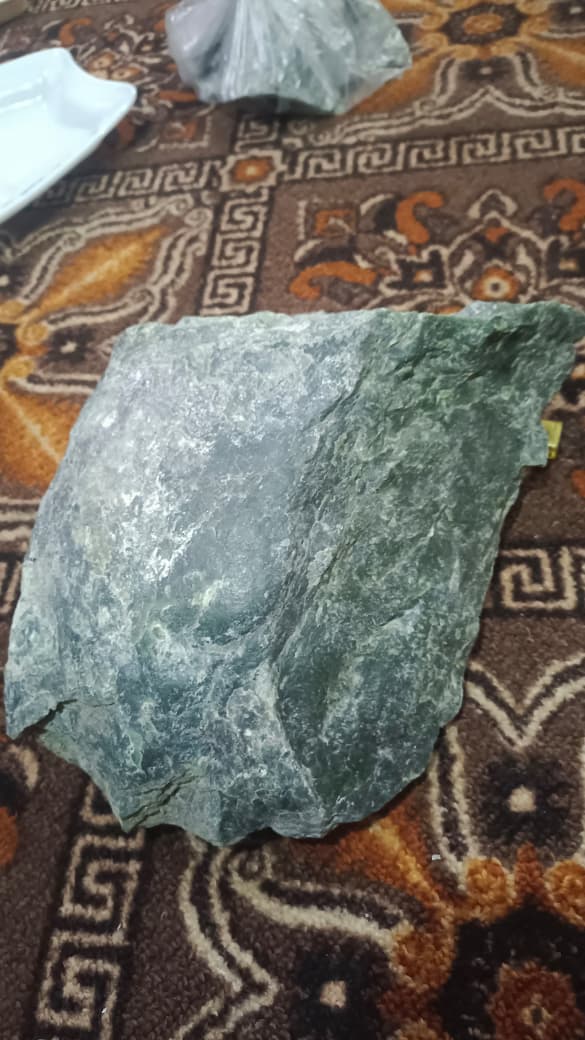
The Green Rock at Kharmang: Serpentine, Jade, and a Mineral Mars Rovers Look For
Serpentine turns up across both of our Kharmang licences, Hilal Abad and Mahdi Abad, alongside nephrite jade. It forms through a reaction that makes hydrogen out of rock and water, which is why NASA instruments have spent years hunting for it on Mars.
Read insight→